
Are Mini Splits Worth It?
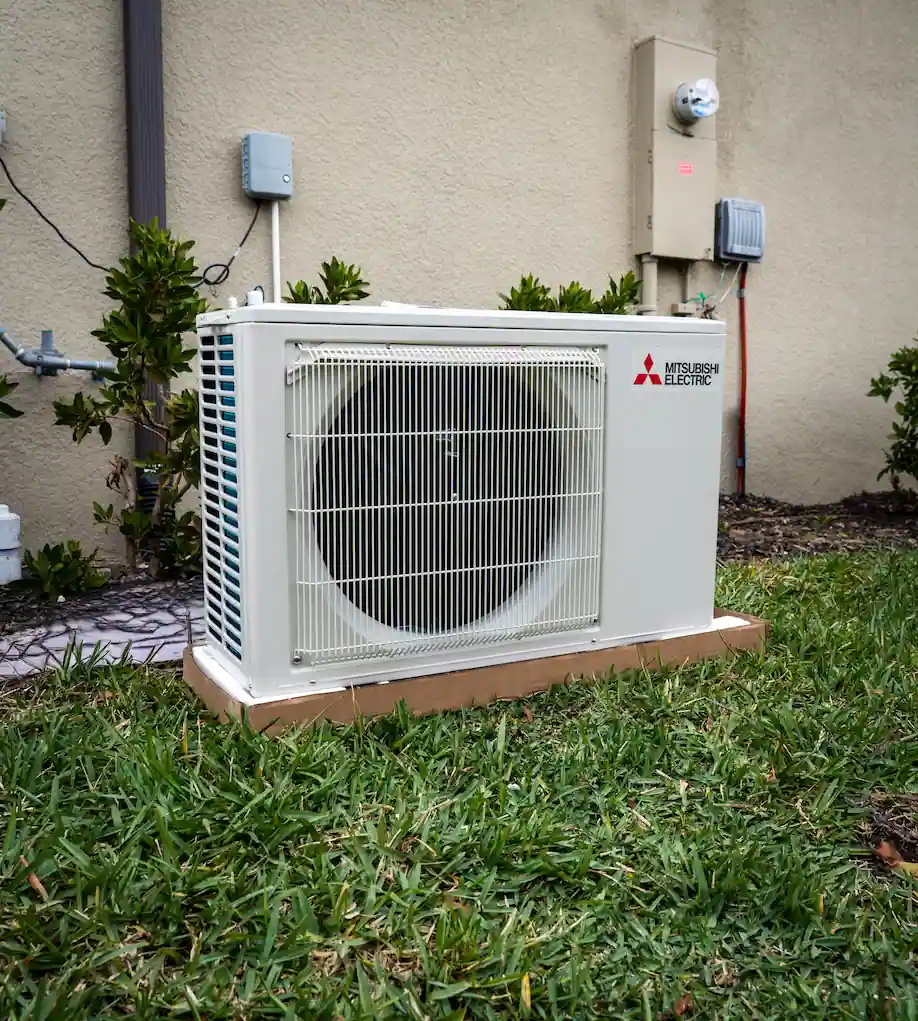
For many homeowners, mini splits are worth it—especially when a home does not have ductwork, has rooms that are difficult to keep comfortable, or relies on expensive electric resistance heating.
They are efficient, flexible, and capable of providing both heating and cooling. However, the upfront cost, appearance of the indoor units, and need for proper system design can make other options more practical in some homes.
The right answer depends on your home, climate, existing HVAC equipment, energy costs, and how many rooms you want to heat or cool.
What Is a Mini Split?
A mini split is a heating and cooling system with two main components:
- An outdoor compressor
- One or more indoor air-handling units
The components are connected by a small bundle containing refrigerant lines, electrical wiring, and a condensate drain. Because air is delivered directly into the room, the system does not need traditional ductwork.
Most systems discussed today are ductless mini-split heat pumps, meaning they can cool a home during summer and reverse direction to provide heat during winter. Cooling-only models are also available, so homeowners should confirm which type they are comparing.
Are Mini Splits Worth It in Florida?
Mini splits can be particularly well suited to Florida’s climate. The state’s long cooling season, relatively mild winters, and high humidity create conditions where an efficient heat-pump system can provide value throughout much of the year.
However, Florida homeowners should pay close attention to humidity control, system sizing, storm protection, and coastal exposure.
Efficient cooling for Florida’s long summers
In Central and South Florida, cooling accounts for a significant portion of household energy use. Mini splits commonly use variable-speed compressors, allowing them to adjust their output instead of repeatedly operating at full capacity.
This can help maintain a steady indoor temperature while using less electricity than older window units or inefficient cooling systems. The actual savings will depend on the equipment being replaced, local electric rates, insulation, sun exposure, and thermostat settings.
Humidity control is just as important as temperature
Florida homes need air conditioning to remove moisture as well as heat. A mini split that is too large may cool a room quickly and shut off before it has removed enough humidity. The result can be a space that feels cool but still damp or clammy.
The University of Florida’s energy-efficiency guidance warns that oversized air-conditioning systems can contribute to high indoor humidity because they do not run long enough to remove sufficient moisture. Read the UF/IFAS guidance.
Before choosing a system, ask whether the sizing calculation includes both:
- Sensible load: the heat that affects indoor temperature
- Latent load: the moisture that affects indoor humidity
A variable-speed system can help with moisture removal, but proper sizing remains essential. Some Florida homes may also benefit from dedicated dehumidification, particularly during mild but humid weather.
Mild winters favor heat-pump operation
Most Florida homes have relatively modest heating needs compared with homes in northern climates. That makes a mini-split heat pump a practical way to provide occasional winter heat without installing a separate furnace.
Heating requirements can still vary considerably between Miami, Tampa, Orlando, Jacksonville, and the Panhandle. Homeowners in North Florida should confirm that the selected system has enough heating capacity for the coldest expected local temperatures.
Outdoor equipment must be prepared for Florida weather
The outdoor unit needs a location with adequate airflow, drainage, and access for maintenance. In flood-prone areas, the installation may also need to account for expected water levels.
Florida building requirements address wind resistance for outdoor mechanical equipment and its supports. Mounting brackets, stands, and anchors should be appropriate for the property’s wind zone and installed according to applicable permitting requirements. This is especially important in coastal areas and Florida’s High-Velocity Hurricane Zone. See Florida Building Commission guidance.
Homes near the coast should also consider salt-air exposure. Ask about corrosion-resistant equipment or protective coil coatings, and follow the manufacturer’s recommended cleaning schedule.
Mini splits do not normally provide fresh outdoor air
Most ductless systems recirculate and condition indoor air; they do not replace a dedicated ventilation system. In tightly sealed Florida homes, ventilation and moisture management should be considered as part of the overall HVAC plan.
Where mini splits often make sense in Florida
A mini split may be especially useful for:
- Older Florida homes without reliable ductwork
- Enclosed porches and properly converted sunrooms
- Finished garages or workshops approved as conditioned spaces
- Home additions where extending ducts would be difficult
- Guest suites and multigenerational living areas
- Rooms that receive heavy afternoon sun
- Condos where installation and association rules permit them
- Seasonal homes that need independent temperature control
Benefits of Mini-Split Systems
High energy efficiency
Mini splits avoid the energy losses associated with leaky or poorly located ductwork. Many also use variable-speed compressors, allowing the equipment to run at a lower output instead of repeatedly turning on and off at full capacity.
Efficiency ratings are important, but they do not tell the whole story. Correct sizing, installation quality, local temperatures, and how the system is operated all influence real-world performance.
Quiet operation
Mini splits are generally quieter than window air conditioners and many portable systems. The compressor sits outdoors, while the indoor unit runs at a relatively low sound level.
Sound ratings differ by model, so light sleepers may want to compare the published indoor and outdoor decibel ratings before choosing equipment.
Flexible installation
Indoor units can be mounted on a wall, recessed into a ceiling, or concealed in a short section of ductwork, depending on the system. This gives homeowners more installation options than a traditional furnace or central air conditioner.
However, the available locations are still limited by drainage, refrigerant-line length, service access, and exterior-unit placement.
Better room-by-room control
Each indoor unit typically has its own thermostat or remote control. This can help solve disagreements over temperature and improve comfort in rooms with different sun exposure or usage patterns.
No on-site combustion
A mini-split heat pump does not burn fuel inside the home. That means it does not produce combustion gases at the equipment itself. This can eliminate some of the risks associated with fuel-burning appliances, although the home may still need smoke and carbon-monoxide alarms for other equipment.
Drawbacks to Consider
A balanced decision should account for the disadvantages as well as the benefits.
Higher upfront cost than basic room air conditioners
A professionally installed mini split usually costs more than a window or portable air conditioner. The final price depends on:
- The number of indoor zones
- System capacity and efficiency
- Electrical upgrades
- Refrigerant-line length
- Wall or ceiling work
- Condensate-drain requirements
- Local labor and permit costs
- The difficulty of accessing installation areas
For a meaningful comparison, ask for itemized estimates that include equipment, labor, electrical work, permits, warranties, and any required repairs or finish work.
Indoor units remain visible
Wall-mounted air handlers are noticeable. Some homeowners do not mind their appearance, while others prefer ceiling cassettes, concealed units, or traditional vents.
Alternative indoor-unit styles can be less visible, but they may cost more or require additional construction.
Every room may not receive equal comfort
A single indoor unit does not automatically distribute air through closed doors or around several corners. One head installed in a hallway may not keep every bedroom at the same temperature.
Whole-home performance depends on a thoughtful design, not simply choosing the largest available system.
Filters need regular cleaning
Many mini splits use washable filters that require more frequent attention than some homeowners expect. The coils, drain pan, and blower wheel may also need periodic professional cleaning.
Skipping maintenance can reduce airflow, efficiency, and indoor air quality.
Installation quality matters
Oversized equipment may cycle poorly, create temperature swings, or provide inadequate moisture removal. Undersized equipment may struggle during extreme weather.
Poor condensate drainage, refrigerant charging, or line-set installation can also lead to avoidable problems. A room-by-room load calculation is more reliable than choosing equipment based only on square footage.
How Much Can a Mini Split Save?
There is no universal savings percentage. The largest reductions are often seen when a mini-split heat pump replaces:
- Electric baseboard heat
- Portable electric heaters
- An older, inefficient HVAC system
- Regular use of several window air conditioners
- Expensive propane or oil heating in some markets
Savings may be smaller when a home already has an efficient central heat pump, low-cost fuel, or well-sealed ductwork.
When comparing options, consider the total annual cost, not just the equipment’s efficiency rating:
- Estimate annual heating and cooling energy use.
- Apply current local electricity and fuel rates.
- Add expected maintenance costs.
- Account for any equipment that will remain as backup.
- Compare the result with the installed cost and expected ownership period.
A contractor or energy auditor should be able to explain the assumptions behind a savings estimate. Be cautious with any proposal that guarantees a large reduction without reviewing your current bills and the condition of your home.
Are Rebates or Tax Credits Available?
Rebates may be available through state programs, municipalities, or electric utilities. Eligibility can depend on the model, efficiency rating, income, installation date, and whether existing equipment is being replaced.
As of August 2026, the previous federal Energy Efficient Home Improvement Credit is not available for property placed in service after December 31, 2025, according to the IRS. Because incentive programs change, homeowners should verify current rules before including a rebate or credit in their budget. See the current IRS guidance.
Check our specials and see how you can save big.
Mini Split vs. Central Air: Which Is Better?
Neither option is automatically better.
A mini split may make more sense when:
- The home has no ducts
- Only a few rooms need conditioning
- Existing ductwork would be expensive to repair or extend
- Independent zones are a priority
- An addition or detached space needs its own system
Central HVAC may make more sense when:
- The home already has properly sized, well-sealed ducts
- Homeowners prefer less-visible supply vents
- Many small or closed-off rooms need consistent conditioning
- A central filtration or ventilation system is important
- Replacing existing central equipment is straightforward
Some homes benefit from a combination: central HVAC for the main living area and a mini split for an addition, bonus room, or persistent trouble spot.
The Bottom Line: Are Mini Splits Worth It?
Mini splits are often worth the investment when they solve a specific problem: adding heating and cooling without ducts, improving an uncomfortable room, replacing electric resistance heat, or creating independently controlled zones.
They may be less compelling when a home already has effective ductwork, every room needs identical conditioning, or the indoor units and maintenance requirements are a poor fit for the homeowner.
The best decision comes from comparing the installed cost, expected energy use, comfort needs, and practical installation details. A properly sized and installed system can be an efficient long-term solution, but a mini split should be chosen because it fits the home—not simply because it is popular.
FAQs
Yes, a properly designed single-zone or multi-zone system can heat and cool an entire house. Success depends on the home’s layout, insulation, climate, and heating and cooling loads.
They use electricity, but heat-pump models are generally much more efficient than electric resistance heaters. Actual consumption depends on weather, system size, efficiency, insulation, utility rates, and thermostat settings.
Routine maintenance is manageable, but it must be done consistently. Homeowners typically need to clean filters, keep the outdoor unit clear, and arrange periodic professional inspection and cleaning.
Only if the benefits outweigh the cost and design tradeoffs. Homes with good existing ductwork may be better served by another central system, while homes with inefficient or nonexistent ducts may gain more from going ductless.